
Death by Drywall: How Modern Wall Systems Are Making Homes Toxic
Walk into almost any modern home, and everything looks right. Clean lines. Smooth white walls. That quiet, finished feeling we’ve been trained to associate with quality. But what you don’t see is doing most of the work—and in a lot of cases, most of the damage.
Behind that painted surface is a wall system that isn’t really a “material” at all. It’s a stack of components: 2”x4” wood studs, drywall, joint compound, paint, insulation, vapor barriers, and sealants. Each one is engineered for speed, cost, and code compliance. Not necessarily for health. Not necessarily for longevity. And definitely not for how buildings actually behave over time.
Drywall itself gets a pass because it looks harmless. In fact, it can contain multiple components like mold-resistent agents, foaming agents, with plasticizers, and other additives. Most modern drywall has an organic paper face, and the combination of gypsum and paper is a major factor in where problems occur.
Drywall is never alone. It lives inside a complex drywall board system that depends on adhesives, coatings, and layered materials—many of which off-gas, degrade, or react to moisture in ways that aren’t obvious until years later. The real issue isn’t a single product. It’s the chemistry set we’ve quietly installed inside our walls.
And then there’s moisture. This is where things start to unravel.
Modern wall assemblies are designed to be tight — sealed up to keep conditioned air inside. In theory, that’s energy efficient. In reality, it often creates a slow-motion trap for moisture. Warm air hits a cooler surface somewhere inside the wall, condensation forms, and that moisture has nowhere to go. Vapor barriers and synthetic layers do a great job of keeping water out, but they’re just as good at keeping it in.
Now introduce drywall—an absorbent material wrapped in organic paper—and you’ve created a perfect environment for mold. Not always the black, headline-grabbing kind. Often it’s subtle. Hidden. Just enough to affect air quality, trigger allergies, or leave a faint musty smell you can’t quite trace.
This isn’t rare. It’s predictable. It’s what happens when you design walls that fight moisture rather than manage it.
The push for tighter homes only made this worse. We sealed buildings in the name of efficiency, then realized we had to mechanically fix the air we’d just trapped inside. So we added HVAC systems, filtration, dehumidification—layer on layer of technology trying to correct a problem that started in the wall itself.
Drywall still dominates because it’s cheap and fast. But “cheap” only works if you ignore time. Over a couple of decades, those walls need repainting, patching, and/or replacing. Water damage shows up where you didn’t expect it. Mold remediation becomes a line item. And then there’s the less visible cost—the impact on indoor air quality and how people actually feel living in these spaces.
As a result of this short-sighted approach, the complex drywall wall system has led to a much more expensive building than we have historically had.
So the question shifts. Not “what’s the fastest way to build a wall,” but “what should a wall actually do?”
At a minimum, it should handle moisture without falling apart. It should help regulate humidity rather than trap it. It should avoid feeding mold and increasing the rate of its degradation. It should rely on as few synthetic chemicals as possible. And ideally, it should last long enough that you don’t have to rebuild it every generation.
That’s a very different set of priorities than the ones that gave us drywall as we know it.
This is where systems like SIREWALL start to stand out—not because they’re trendy, but because they’re based on a completely different way of thinking.
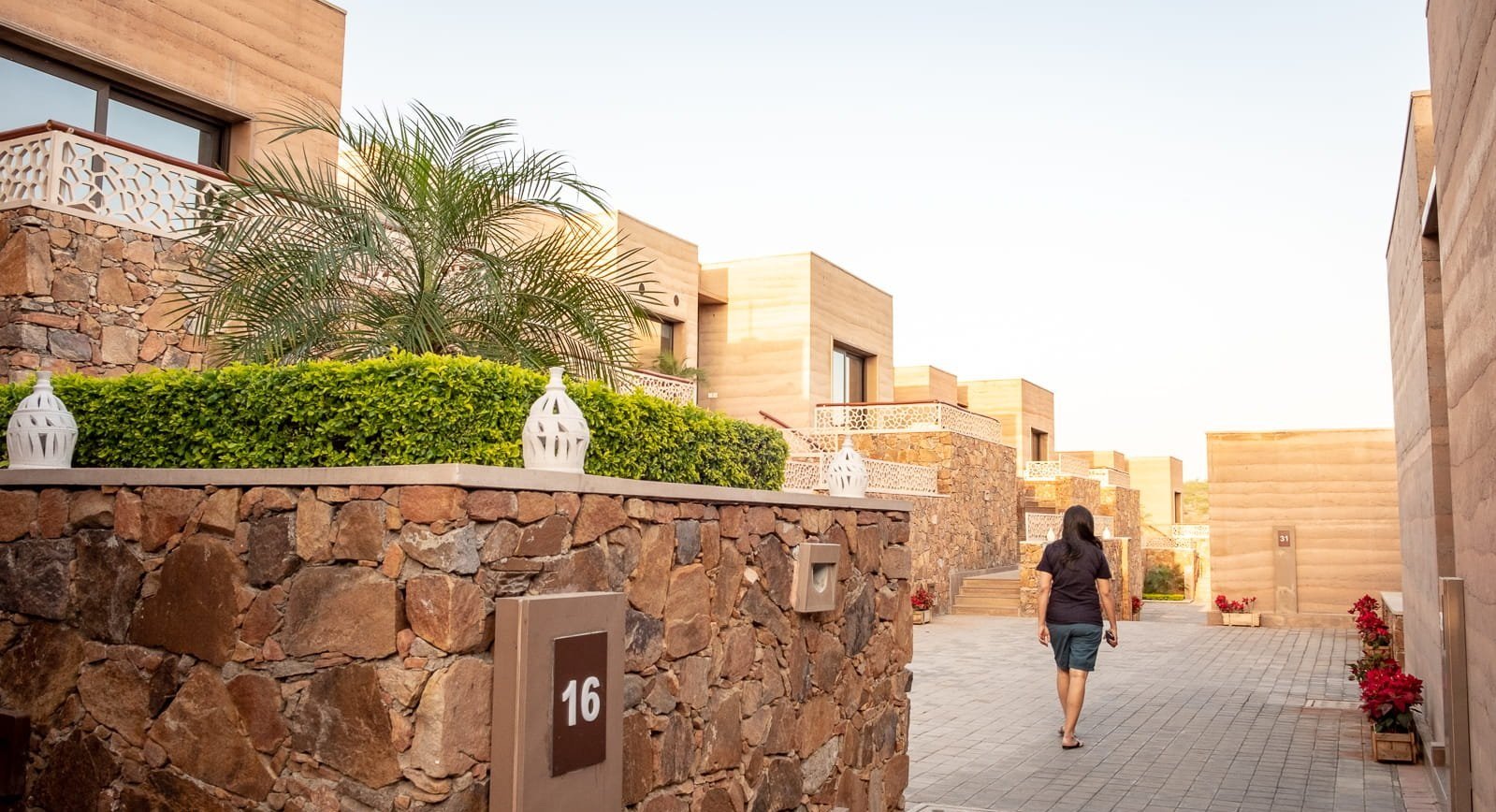
Instead of layering lightweight, fragile materials together and hoping they perform in practice the way they were designed to in a sterile lab environment, SIREWALL takes a more fundamental approach. It uses densely compacted earth, stabilized with cement and engineered into a monolithic wall that incorporates insulation without relying on hollow cavities or complex assemblies. What you end up with is not a sandwich of parts, but a single, massive system that performs.
And that changes everything.
Moisture doesn’t get trapped inside because there’s nowhere for it to hide. The wall itself can absorb and release humidity, acting more like a buffer than a barrier. There’s no paper facing, no organic layer quietly feeding mold and degrading. No coatings, no adhesives, and no opportunities for chemical off-gassing to become part of daily life.
It also changes how a building feels. Thermal mass combined with insulation creates a kind of stability that lightweight walls can’t replicate. Temperatures don’t swing as wildly. Humidity stays more balanced. The building stops reacting so aggressively to every change in weather or occupancy.
And then there’s time. Finished drywall is expected to wear out. SIREWALL is the structure and the finish in one. It doesn’t need to be covered up or replaced in cycles. It just… lasts. Centuries, easily. Potentially much longer. Not because it’s overbuilt, but because it’s simple in the right ways.
None of this is about nostalgia or going back to “old methods.” It’s about acknowledging that buildings are physical systems, and those systems have to respect moisture, air, material reality and time. For thousands of years, people built with materials that could handle those forces. Modern construction tried to outsmart them.
The result is what we’re living in now: walls that look perfect on day one, and slowly become liabilities over time.
So no, drywall isn’t “killing” people in some dramatic, immediate sense. But it is part of a broader pattern—one where buildings are designed for speed and cost first, and long-term health somewhere down the list. The effects show up gradually: in higher living costs, in air quality, in maintenance, in how a home ages, and in how it feels to live in it.
Fixing that doesn’t start with better paint or a more advanced HVAC system. It starts with the approach. The Structure. The walls.
Because the wall is a core system in any bulding. Get that right, and everything else gets easier. Air improves. Moisture stabilizes. Maintenance drops. The building starts working with you instead of against you.
And once you see that clearly, it’s hard to go back to thinking of drywall as “good enough.”
Written by Michael Palethorpe
