
Good, Fast, or Cheap: Why Modern Buildings Keep Getting It Wrong
There’s a rule in construction that’s been around forever, and no matter how much the industry tries to outgrow it, it doesn’t budge:
You can have something good, fast, or cheap. At best, you get two of the three.
It’s not a clever saying. It’s a constraint. And yet modern construction has quietly decided to ignore it—or worse, pretend to hack it by substituting “aesthetically pleasing” for good.
In truth, most modern buildings only achieve even one of the three. Houses are going up fast, but they’re not necessarily cheap, and they’re certainly not good.
Walk onto almost any jobsite today, and the priorities are obvious. Speed matters. Cost matters. Timelines are compressed, budgets are tight, and everything is optimized to move quickly and come in under a number. That’s the combination we’ve collectively chosen: fast and cheap.
The irony is in how these homes are marketed—sold as high quality, efficient, even “better living.” At the same time, many are priced out of reach for the very people they’re supposed to serve.
Something doesn’t add up.
And something has to give.
What’s been sacrificed isn’t always obvious on day one. The walls look straight. The finishes look clean. Everything photographs well enough to sell. But give it time, and what is hidden behind drywall and tile, in ceilings and roofs, the footing and drainage soon start to show the cracks and failings of cheap and fast construction—it is in the overall assessment of quality (good), it's not just in the materials, or the architecture, or the craftsmanship. It is about more than that. It’s about how the building actually behaves. It’s about how healthy the indoor air is without utilizing systems to compensate to poor materials, it’s about how long the building lasts, it’s about how much the building costs after day one, it’s about much more than the first day aesthetics, and marketing material.
Walls that trap moisture rather than manage it. Materials that off-gas rather than remain neutral. Systems that rely on layers of mechanical fixes just to maintain basic comfort. Buildings that age faster than they should and cost more to maintain than anyone planned for.
Fast and cheap didn’t just edge out good. In many cases, they replaced it with something that’s quietly worse. Cheap masquerading as good has replaced actually good.
The result is poor indoor air quality, poor durability, additional maintenance, additional long-term cost. Cheap masquerading as good is worse than just cheap because it comes with many unforeseen and unexpected costs to health, finances and quality of life.
The industry doesn’t like to say it that way, but people living in these buildings feel it. They just don’t always know where it’s coming from.
Cheap is the easiest part to sell, and also the most misleading. Because cheap almost never means inexpensive over the life of a building. It means inexpensive at the moment of construction. It means you pushed cost into the future and called it savings.
That future shows up eventually—in maintenance, repairs, replacements, higher energy use, and sometimes health issues that are hard to trace but easy to feel once you’ve lived in the space long enough.
We’ve become very good at optimizing the least important phase of a building’s life—the moment it’s built—and very bad at thinking about what happens after. Homes should never be built for what they look and feel like on day one, they should be built for the most important phase of the home's existence, which is the years, decades and even centuries it is inhabited, providing safety, shelter, and comfort for its inhabitants.
Even in circles trying to do better, the same trap shows up. Rammed earth has gained attention because it feels like a return to something more honest. Less synthetic. More grounded. More aligned with what a home is supposed to provide. Safety, shelter, comfort...etc.
And that instinct is right.
But then the assumption creeps in: if it’s made of earth, it must be cheap.
After all, dirt is cheap.
And yes, rammed earth can be done cheaply. You can cut corners on soil science, design, and detailing. You can simplify the process and treat it more like a finish than a structure. You can make it fast enough and inexpensive enough to fit neatly into the same model modern construction already runs on.
But then you’re right back where you started.
You’ve chosen cheap. You’ve likely chosen fast. And you’ve sacrificed good.
Because building rammed earth well isn’t easy. It takes engineering, discipline, and a commitment to performance that actually matters. If you’re not reaching structural strengths comparable to concrete—around 3,000 psi or 20 MPa—you’re not building a true structural system. You’re building something that needs to be protected, sealed, and limited. Something that looks solid, but doesn’t behave like it over time.
At that point, it’s not solving the problem. It’s just a different version of cheap.
Modern homes today are often rated to last less than 50 years. And when they reach the end of that lifespan, more than 95% of the materials can’t realistically be recycled or reused. They end up in landfill.
There are other words for materials that can’t be reused and don’t last very long: disposable.
Or more bluntly—garbage.
So it’s worth asking the uncomfortable question: are we living in disposable, garbage, homes?
In many cases, the answer is uncomfortably close to yes. They may look good and feel good on day one, but it doesn’t take long before they begin the slow slide toward being torn out, replaced, and thrown away.
If rammed earth is approached the same way, it doesn’t fix that. It just changes the aesthetic of the problem.
That’s where the thinking behind SIREWALL starts to separate itself—not because it’s trying to be different, but because it refuses to play the same game.
At SIREWALL, “good” isn’t negotiable. It’s the starting point.
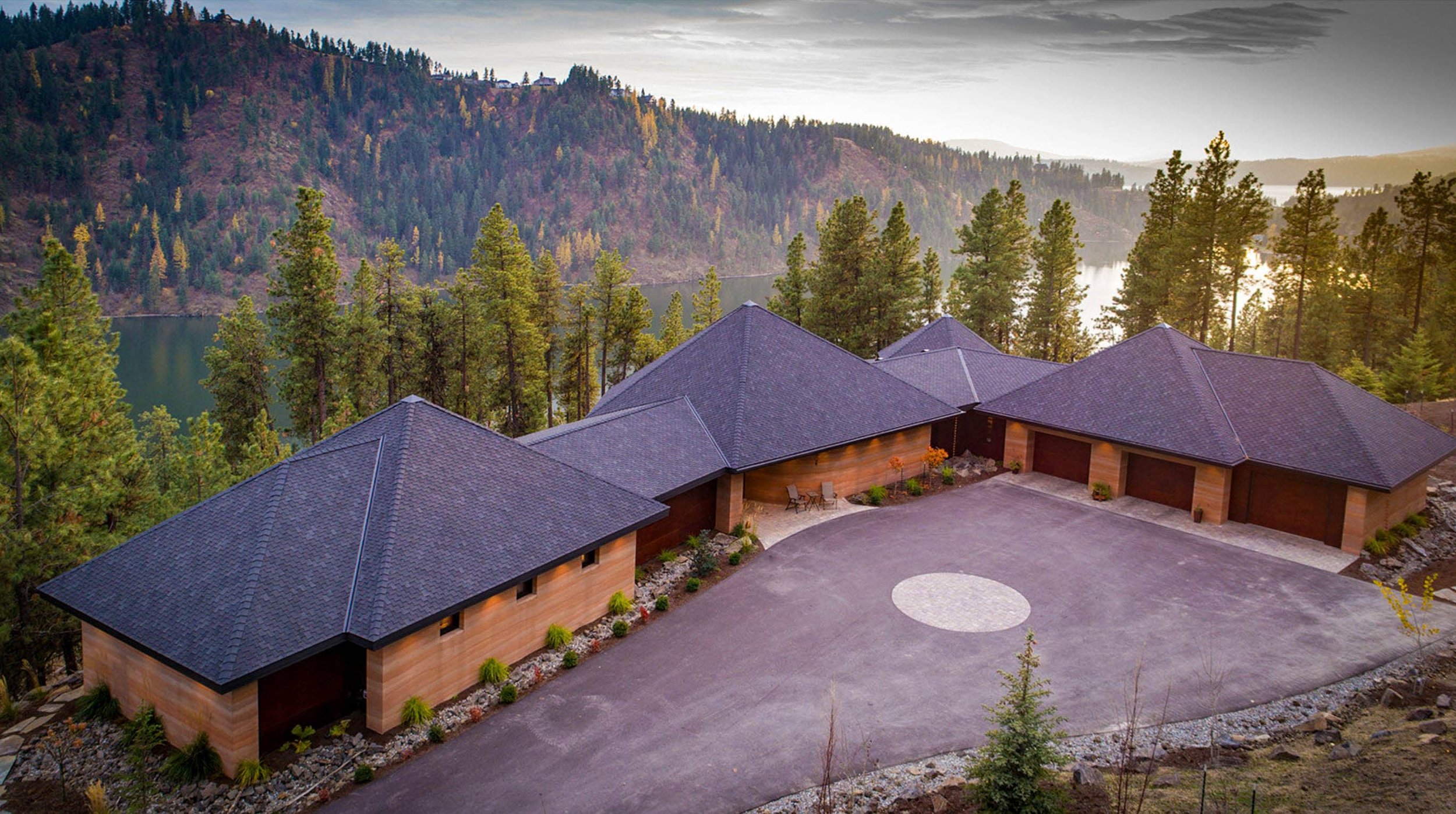
That means the wall has to perform structurally, with strength comparable to or better than concrete. It has to manage moisture in a real, physical way—not by trapping it and hoping for the best. And it has to last long enough that you’re not thinking about replacing it in a few centuries, or multiple lifetimes.
Once you lock that in, the triangle doesn’t disappear. You just stop pretending you can have all three.
Some projects lean toward speed. Others need to keep a closer eye on cost. But, for us, those decisions happen after good is secured—not instead of it. You’re not trading away performance to hit a number. You’re working within reality and making conscious decisions about where to push and where to hold the line.
And something interesting happens when you take that approach.
You get better.
Processes improve. Systems get refined. You find ways to build faster without cutting the corners that matter. You find ways to manage costs without hollowing out the integrity of the system. You don’t break the rule—but you get closer to the edge of it than most people think is possible.
SIREWALL has already moved into that space. Not the cheapest option. Not the fastest. But far from the slow, expensive outlier people assume. And importantly, it gets there without sacrificing the things that actually determine how a building performs over time.
Because that’s the part that’s been missing from the conversation.
When you choose fast and cheap, the consequences don’t show up immediately. They show up later—and they stack up quickly. A small amount of moisture issue becomes a mold problem. A minor repair becomes a pattern. A material that was “good enough” becomes something you’re constantly dealing with.
The building starts asking more from you than it ever gave back.
Flip that, and the experience changes completely. The walls address moisture rather than ignore it. The material remains stable rather than breaking down. The system works quietly in the background instead of demanding constant intervention.
It’s less dramatic. Less visible.
But over time, it’s everything.
So the real question isn’t whether you can have good, fast, and cheap.
You can’t. That hasn’t changed.
The question is which two you’re choosing—and whether you’re honest about the one you’re giving up.
Most of modern construction has already made its decision. Through inertia. Not consciously. But reliably.
The only real shift is deciding to make a different one.
