
INTRODUCTION — TWO WALLS, TWO VERY DIFFERENT RESULTS
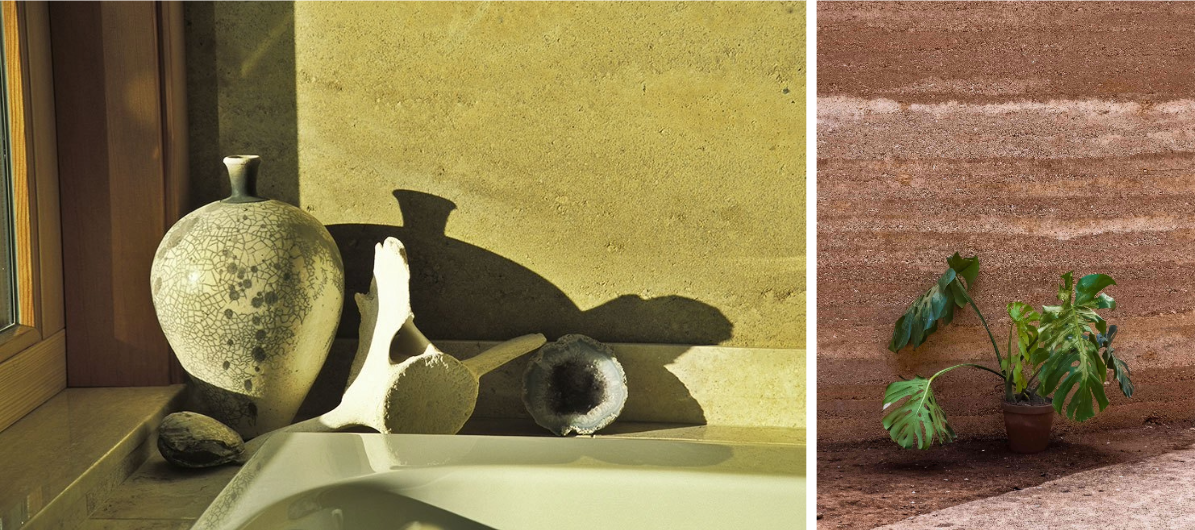
Imagine standing in front of two rammed-earth walls.
They look almost identical. Their earth faces can have the same beautiful layers, similar colors, and many of the same basic ingredients.
But one wall might test at 800 PSI, while the other could test at 5,000 PSI or more.
One may need separate structural support, insulation, weather protection, and ongoing surface treatment. The other may already be engineered to provide those functions as one complete wall system.
One may last decades and one may last centuries.
You cannot see that difference in a photograph.
But you will live with the difference—in the cost, comfort, maintenance, durability, and limitations of the finished building.
In this video, we are comparing the stabilized rammed earth commonly built today with SIREWALL. We will look at six areas that matter to owners, architects, and builders: strength, the complete wall system, finish quality, the construction process, experience, and real cost.
A QUICK ORIENTATION
Rammed earth is not one uniform building system.
Traditional Rammed Earth, or TRE, is the ancient form using compacted earth without modern stabilization, integrated insulation, or defined strength standards.
Stabilized Rammed Earth, or SRE, adds cement, lime, or other stabilizing materials. It is what most people mean when they talk about contemporary rammed earth.
Structural Insulated Rammed Earth, or SIRE, combines structural rammed-earth layers, continuous insulation, reinforcement, and moisture management as one engineered exterior wall system.
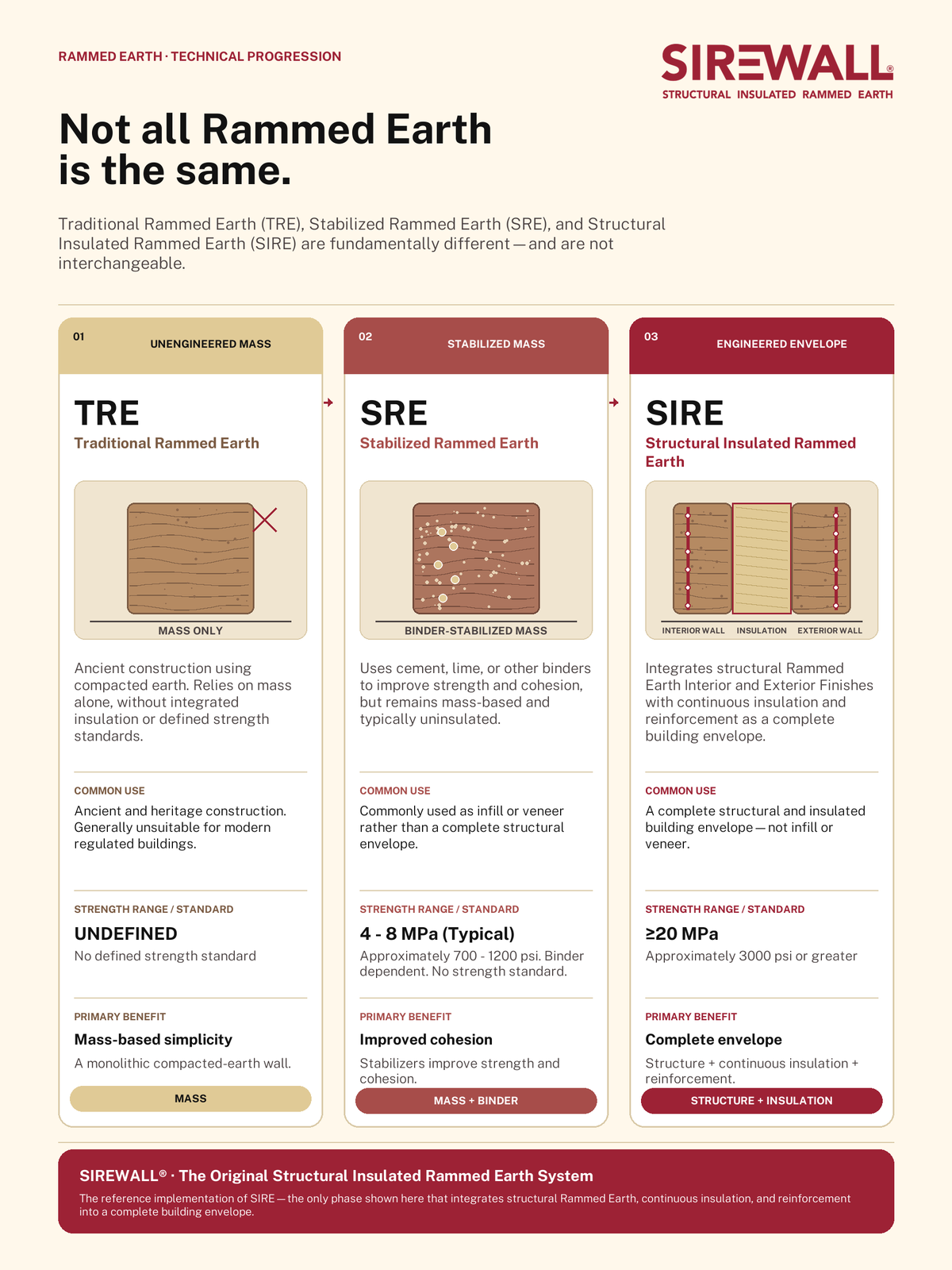
SIREWALL is the inventor of SIRE and our main comparison in this article is the SIREWALL System versus typical SRE.
PART 1 — STRENGTH: THE DIFFERENCE YOU CANNOT SEE
Let’s begin with what we believe is the most important difference: strength.
Many stabilized rammed-earth mixes test around 600 to 1,200 PSI, or 4 to 8 megapascals.
SIREWALL begins at 3,000 PSI, or about 20 megapascals, and can reach 8,000 PSI, or about 55 megapascals.
That is strength comparable to structural concrete.
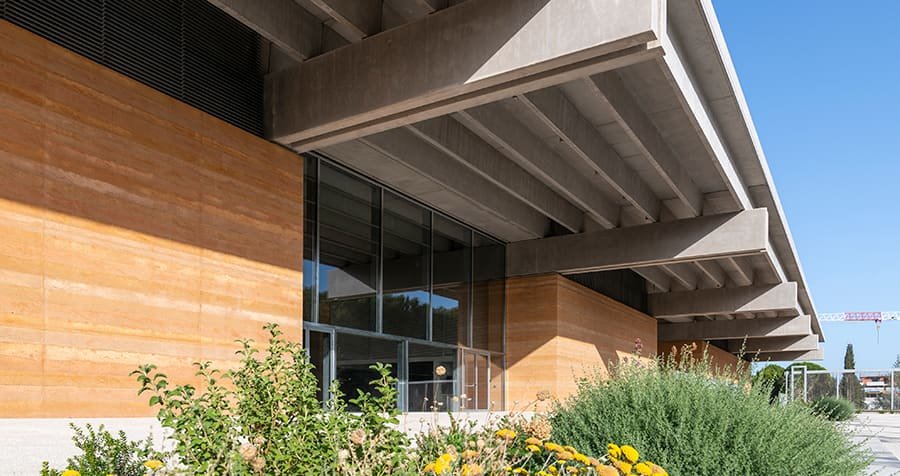
SIREWALL load-bearing walls
So how can two walls made with similar basic ingredients perform so differently?
Much of the answer is in the material science.
Around 90 percent of a typical stabilized rammed-earth mix is aggregate and sand. The way those materials are selected, graded, combined, tested, and compacted has an enormous effect on the finished wall.
SIREWALL has spent more than 35 years developing the material designs and construction processes needed to reach these higher strengths consistently.
And strength changes what the wall can do.
A high-strength SIREWALL wall can be engineered to support roofs and floors, resist demanding loads, and extend below grade for applications such as basements.
Using SIREWALL can remove the need for separate structural components.
For example, some lower-strength rammed-earth projects use concrete stem walls to lift the earth wall above the surrounding ground. A properly designed SIREWALL wall can begin directly from the foundation, potentially eliminating that additional concrete wall.
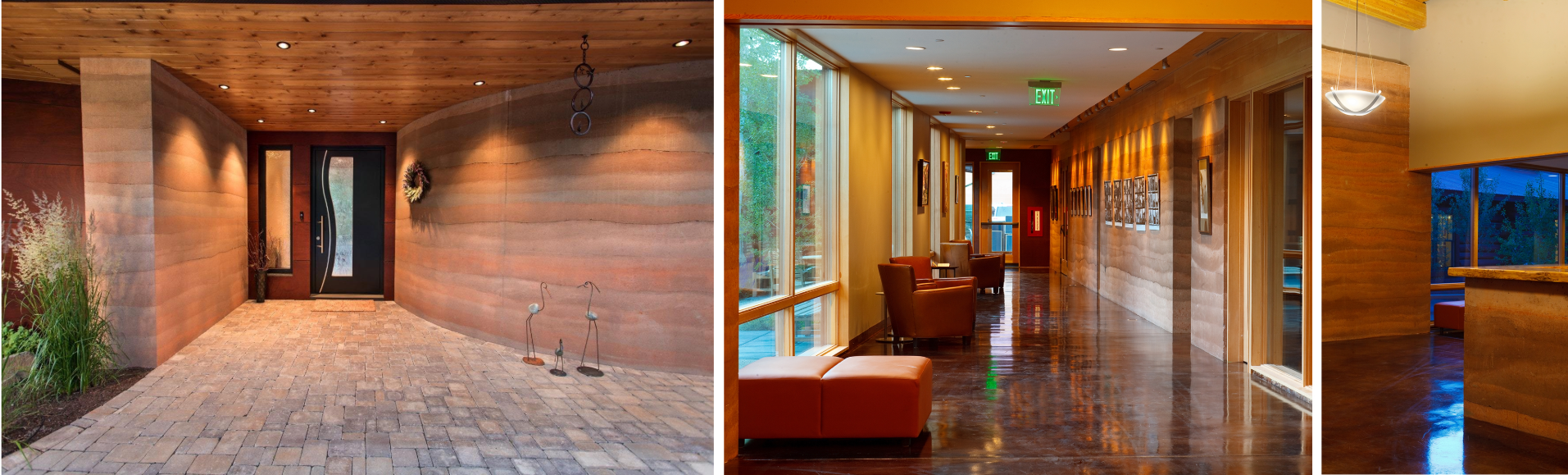
SIREWALL projects - no concrete stem wall
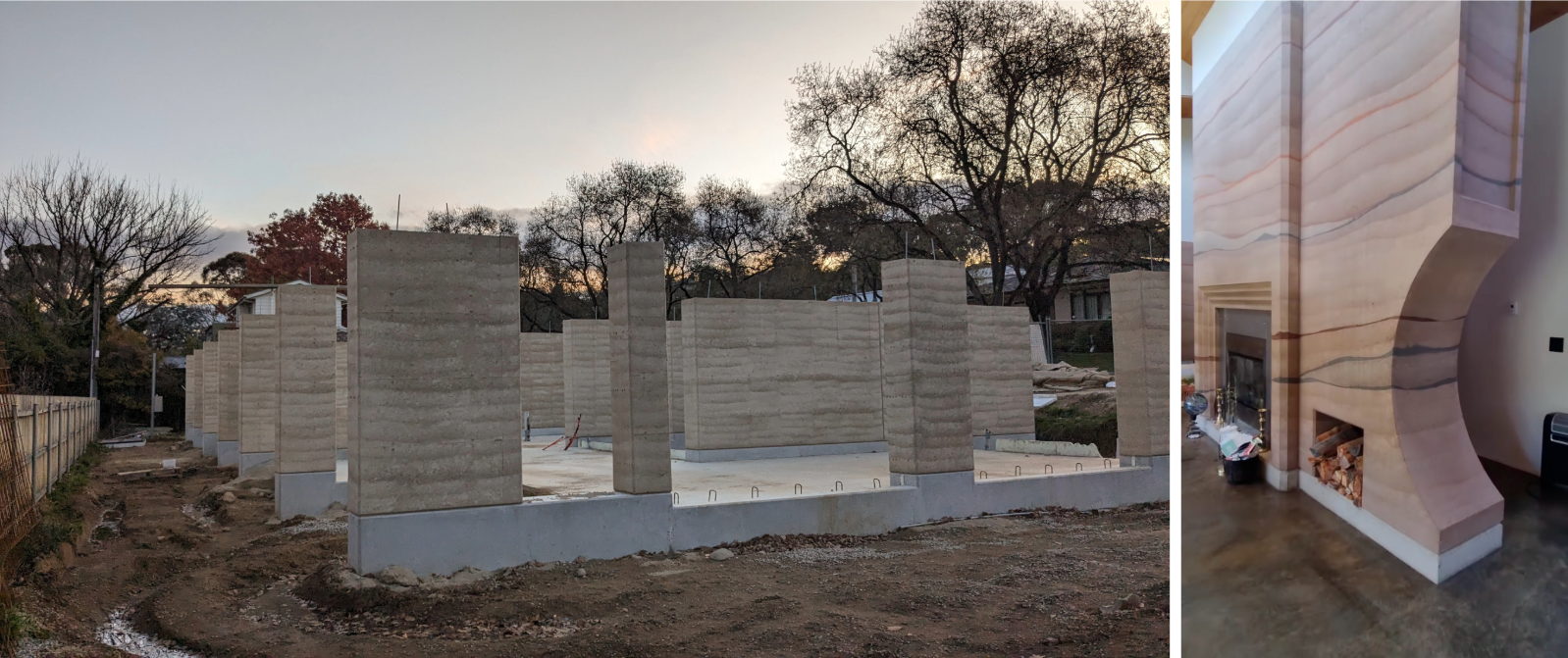
Low Strength, Stabilized Rammed (SRE) Walls with concrete stem walls
Strength affects durability too.
Lower-strength rammed earth can release fine particles from its surface. This is called dusting. It can also chip or erode. Depending on the mix and finish, the wall may need sealing and periodic resealing.
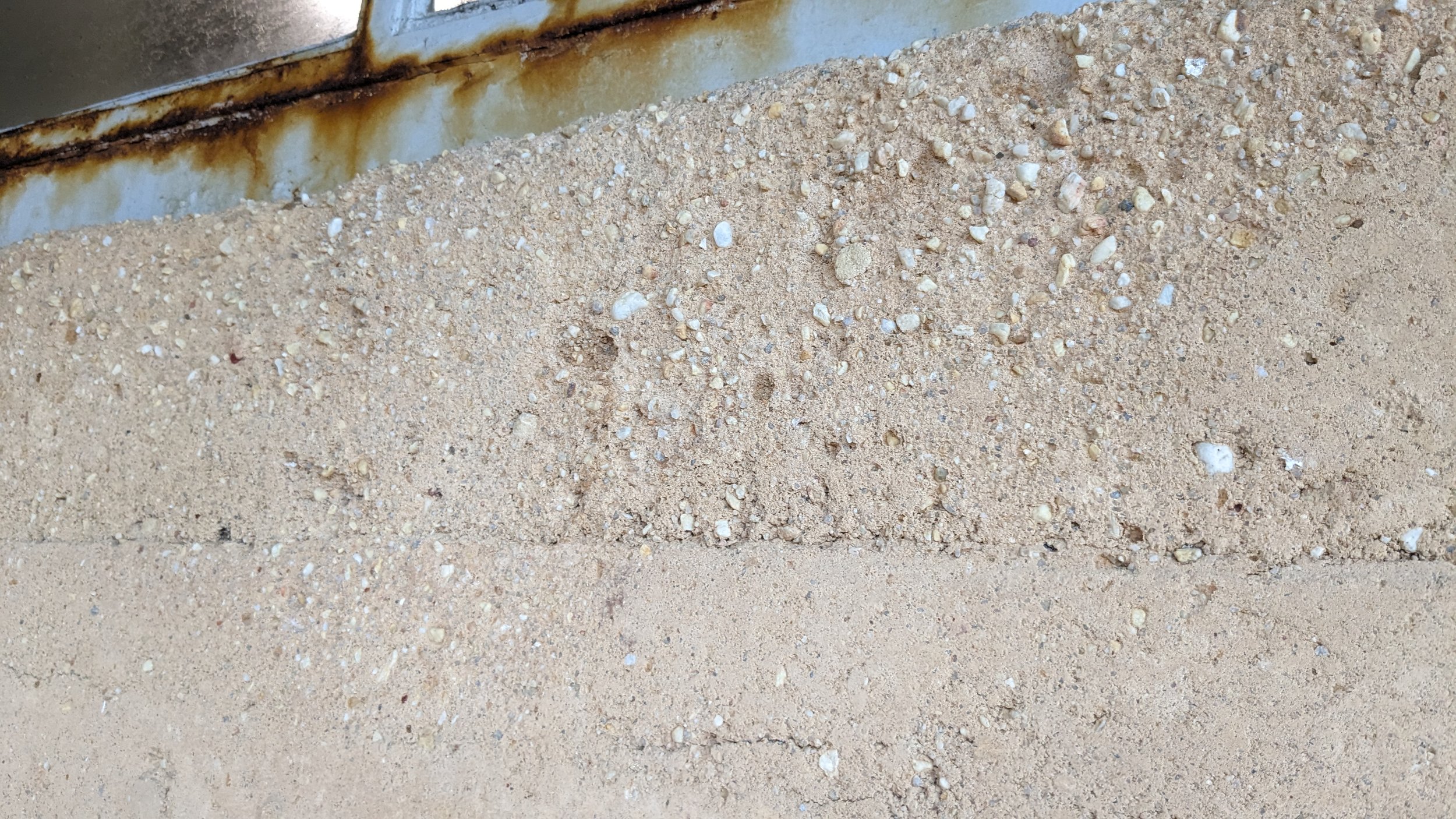
Low Strength, Stabilized Rammed Earth (SRE) Wall showing signs of erosion
Video above: 20 year old, Low Strength, Stabilized Rammed Earth (SRE) Wall showing signs of extreme erosion.
Video above: 4000+ psi SIREWALL wall in Texas being shot with an AR15 rifle to demonstrate it’s strength. This was conducted in a controlled environment, please don’t try this for yourself.
SIREWALL combines high-strength material with integral water repellency. It is designed to resist weathering, including demanding freeze-thaw conditions, without depending on routine surface sealing as its primary defense.
In an account shared with SIREWALL, an architect in Australia described a beautiful high-end rammed-earth home with weak walls. After the owners moved in, their cleaner discovered that the vacuum-cleaner head was chipping away the bottom of the walls.
Imagine paying for a beautiful permanent home and learning that normal cleaning is damaging the wall.
That story captures the difference between a wall that looks strong and one that has been engineered and tested to be strong.
We have experienced multiple examples of low-strength, Stabilized Rammed Earth (SRE) walls that are showing signs of extreme deterioration at only 20 years old. (See photos and video below).
Imagine paying for a beautiful permanent home and learning that you rammed earth walls will only last decades.
SIREWALL’s strength requires more work upfront but is designed to last for centuries. The material used in SIREWALL walls must be carefully selected and tested, and the project requires engineering, trained construction, and appropriate equipment. Those requirements cost money. They can also remove other costs and reduce uncertainty across the project.
PART 2 — A COMPLETE WALL SYSTEM
The second major difference is that SIREWALL is not simply a rammed-earth material. It is a complete exterior wall system.
Think about everything an exterior wall must do.
It may need to support the building, resist weather, slow heat flow, manage moisture, and provide finished surfaces inside and outside.
A solid SRE wall provides thermal mass and beauty, but it is typically uninsulated. At the most common thicknesses of 12 to 24 inches, its insulation value is roughly R-3 to R-6 (using the FTC R-value Rule which is the standard in the USA).
In many climates, that is not enough. Separate insulation and other wall components must then be added.
Each additional component brings more materials, labor, connections, detailing, and opportunities for mistakes.
SIREWALL was developed to coordinate those jobs within one wall assembly.
Its standard configuration begins just under R-30 (using the FTC R-value Rule which is the standard in the USA). Its structural earth layers, continuous insulation, reinforcement, moisture-management strategy, and finished interior and exterior faces are designed together.
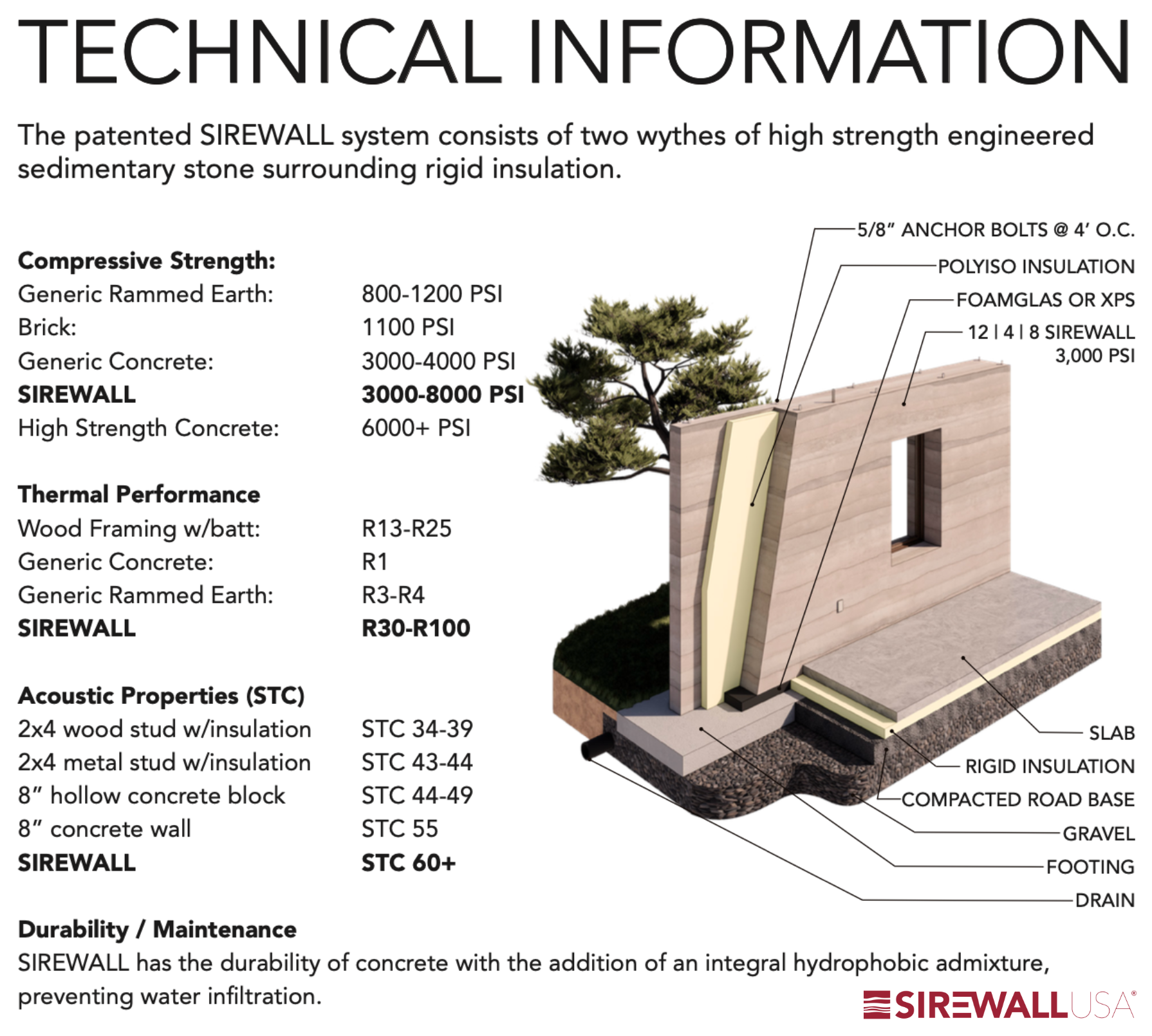
For architects, that can simplify wall coordination. For builders, it can reduce the number of separate operations and trades. For owners, it can provide a durable finished wall without covering the earth behind drywall or conventional cladding.
The SIREWALL process requires specialized forms, equipment, testing, and training. But when the wall is complete, several major building functions have been completed together rather than added one at a time.
PART 3 — TEXTURE AND FINISH: THE DETAILS MATTER
The third difference is the finished appearance.
Rammed earth is chosen partly because the wall itself is beautiful. Those natural layers create a character few materials can match.
But a wall that looks good from 15 feet away may look very different when you stand beside it.
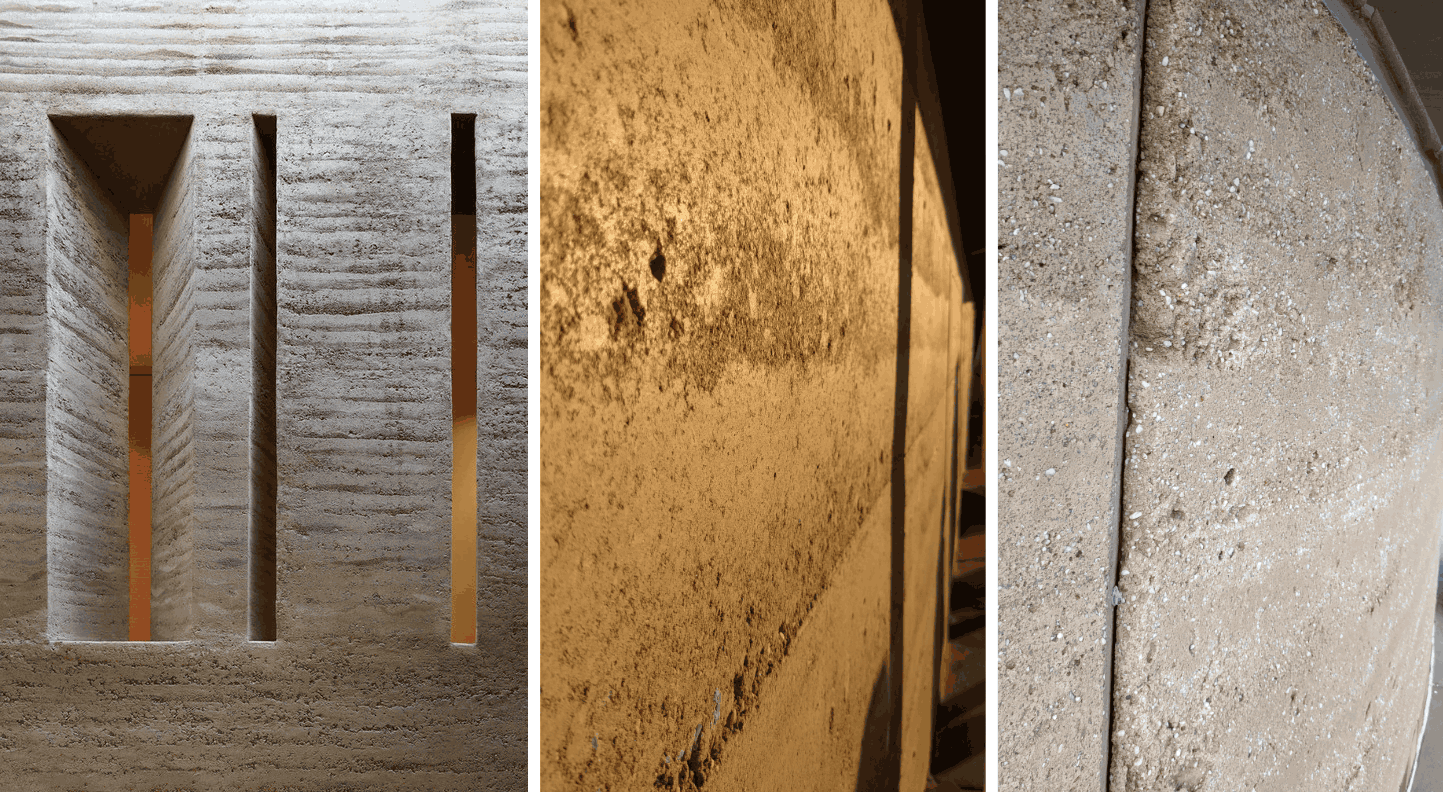
Examples of typical Stabilized Rammed Earth (SRE) rough surface finish
Stabilized Rammed Earth (SRE) walls often have a rougher surface. That may be completely appropriate if that is the design intent and when speed, or a rustic finish matters more than precision.
SIREWALL is intended for architectural work where the wall must also hold up visually at arm’s length. Its methods target a fine, relatively consistent finish around 600 microns while preserving the natural variation of rammed earth.
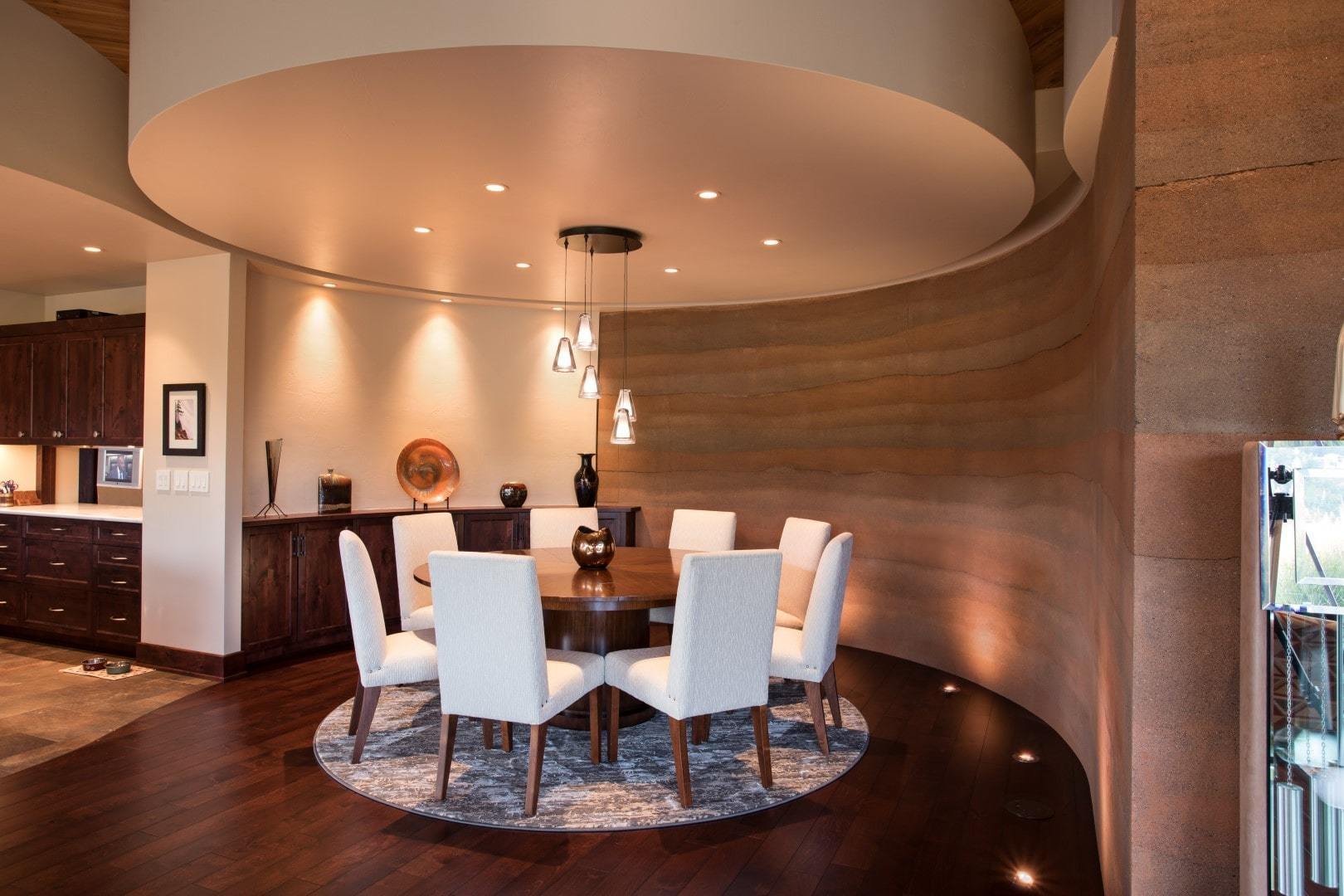
Rocky Mountain Passive House - a SIREWALL project in Coeur d'Alene, Idaho that was the world’s first rammed earth passive house
SIREWALL also avoids through-ties.
Through-ties are rods used to hold wall forms together. After they are removed, they can leave a repeated pattern of holes or patches across the finished wall—the connect-the-dots pattern often seen on concrete.
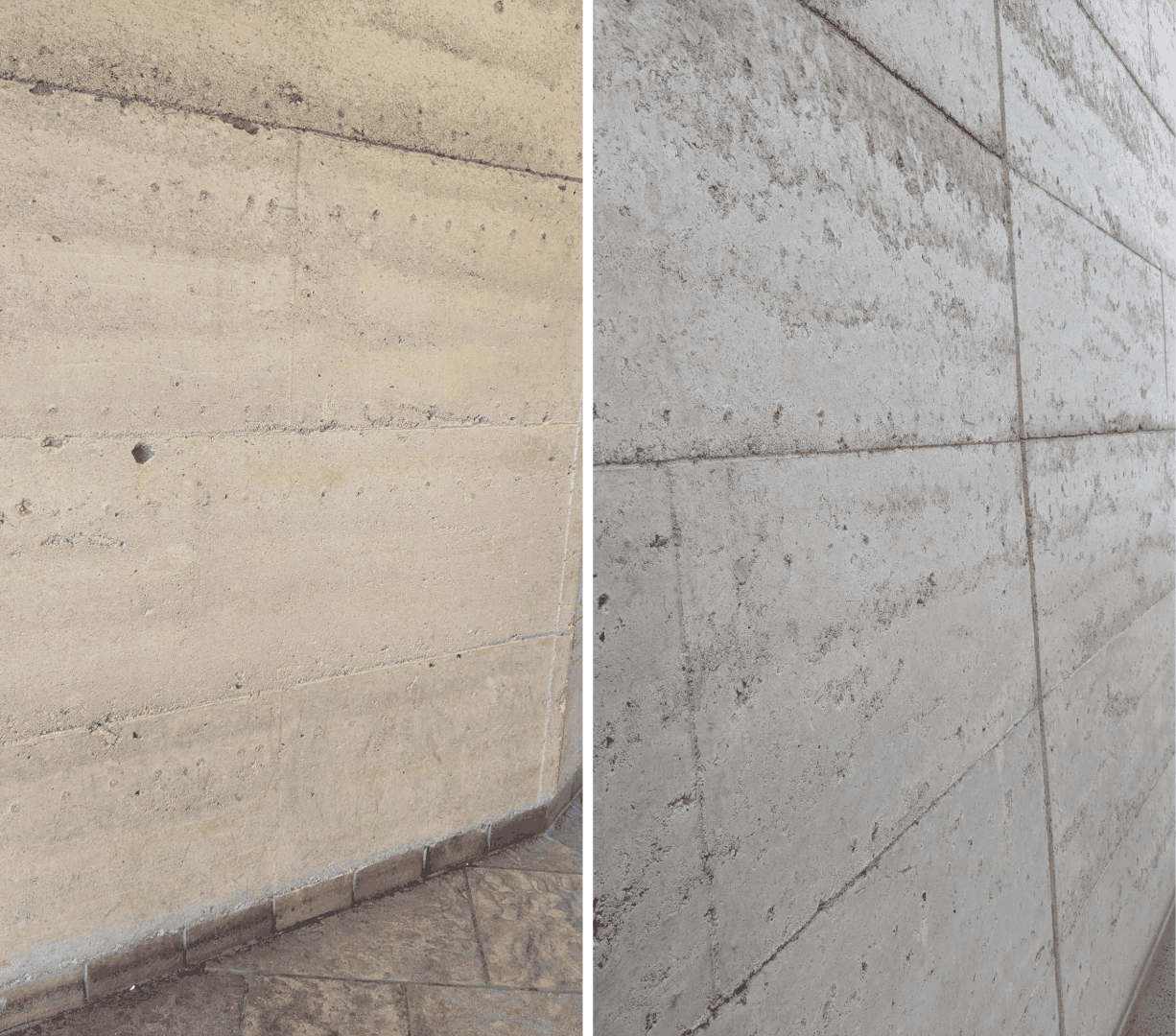
Examples of typical through tie pattern on Stabilized Rammed Earth Walls (SRE)
Alternatively, SIREWALL uses a forming approach that does not require ties passing through the wall, so that pattern does not interrupt the finished earth surface.
For a utility building, this level of finish may not matter. When the rammed-earth wall is one of the defining architectural features of a home or public building, it matters a great deal.
PART 4 — A SYSTEMIZED APPROACH: TAKING THE GUESSWORK OUT
The fourth difference is the process used to get the finished wall.
SRE construction can vary enormously between builders.
Different materials. Different equipment. Different mix designs. Different compaction. Different forms. Different testing. Different standards for the finished result.
That flexibility can be useful. It may support local materials, lower certain upfront costs, or suit a smaller project with different performance goals.
But flexibility can also create uncertainty and lead to possible costly failures.
Will the material reach the required strength? Can the wall carry the intended loads? How will it be insulated? How will the installation team demonstrate code compliance? Will the finish meet the owner’s expectations? What happens if the wall does not perform as expected?
SIREWALL has spent more than 35 years building a systematic approach to those questions.
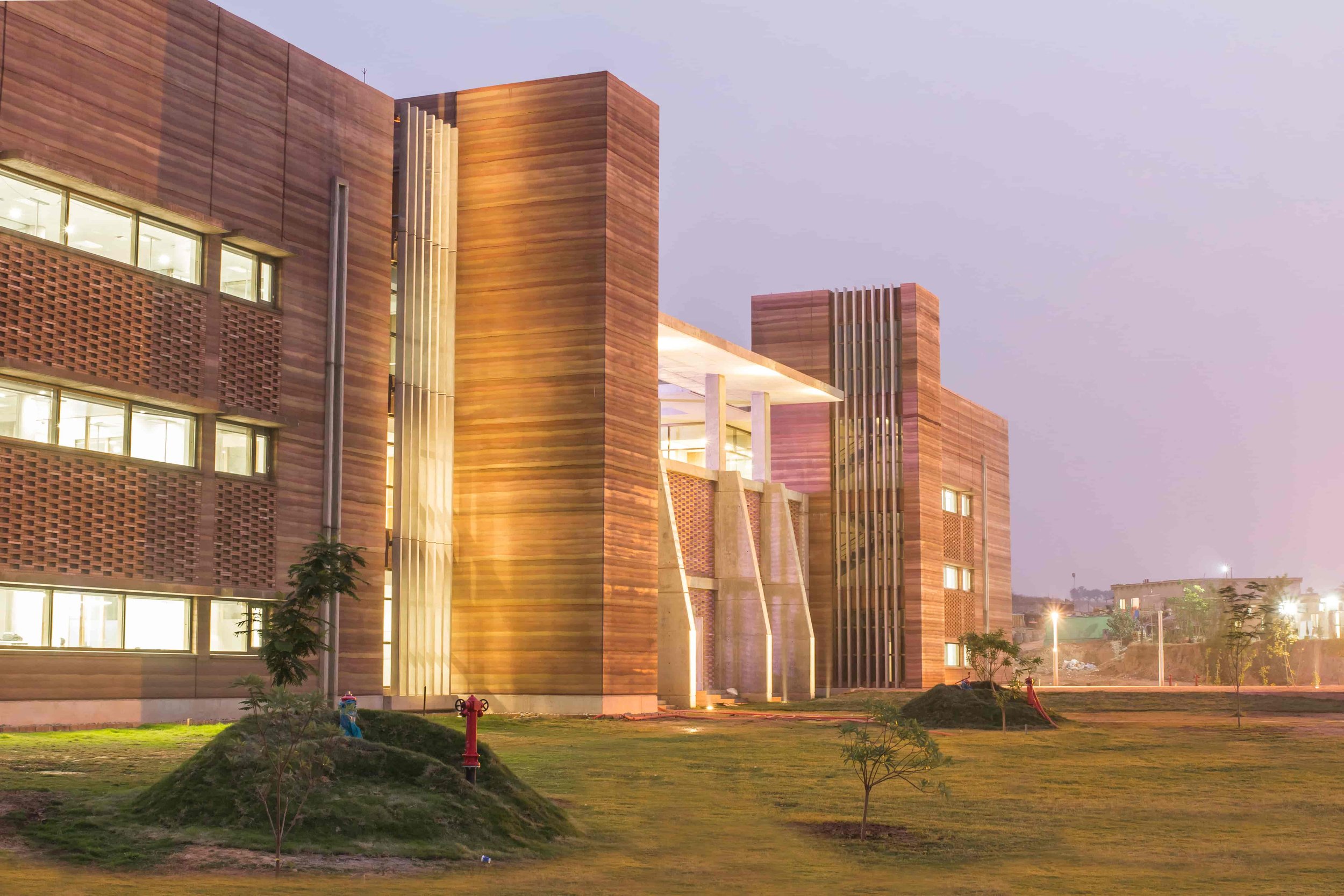
Telenor Headquarters - a SIREWALL project with a total project area of approximately 600,000 square feet.
Material evaluation, mix development, testing, engineering, formwork, equipment, compaction, and construction quality are treated as connected parts of one process.
Every site, climate, material source, and building still has its own requirements. A system does not make every project identical.
It means the team is not inventing the whole method from scratch each time. The processes can be taught, repeated, and adapted to different projects and locations, which provides certainty to installers, owners, and the project overall.
That is especially important for owners, architects, and builders who are new to rammed earth. SIREWALL provides a tested starting point, training, project-specific planning, and support aimed at making high-performance rammed-earth construction accessible in more places without lowering the standard.
PART 5 — EXPERIENCE: YOU DO NOT HAVE TO MAKE EVERY MISTAKE YOURSELF
The fifth difference is experience.
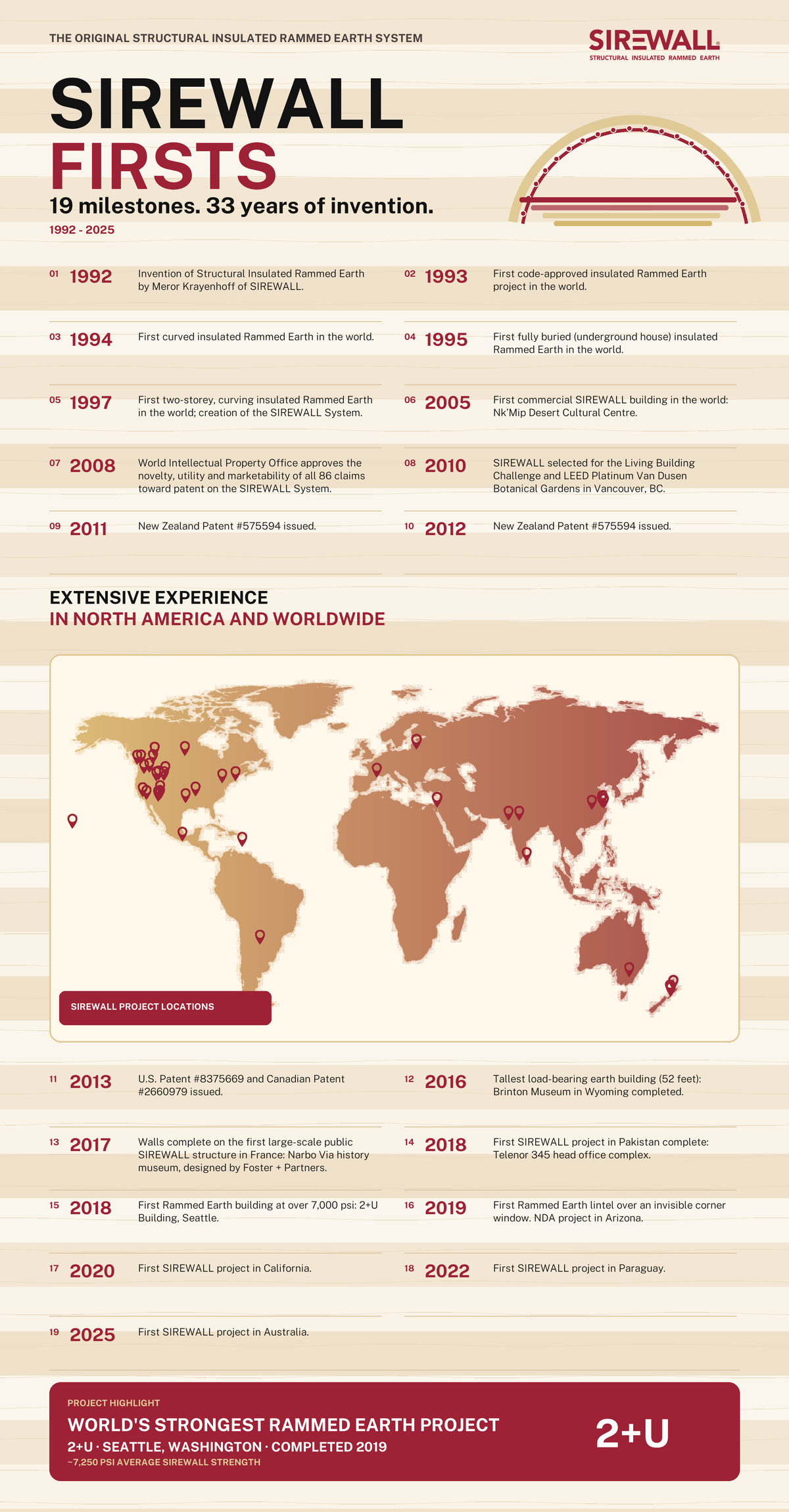
SIREWALL has more than 35 years of rammed-earth experience on dozens of residential and commercial projects.
During that time, the SIREWALL team has encountered problems, made mistakes, solved them, and built those lessons into the systemized means and methods that have successfully delivered exceptional results on our award-winning and groundbreaking projects.
SIREWALL has been used for demanding structural applications, world record-holding building heights, extreme climates, seismic requirements, fire-resistance goals, and high-end architectural work.
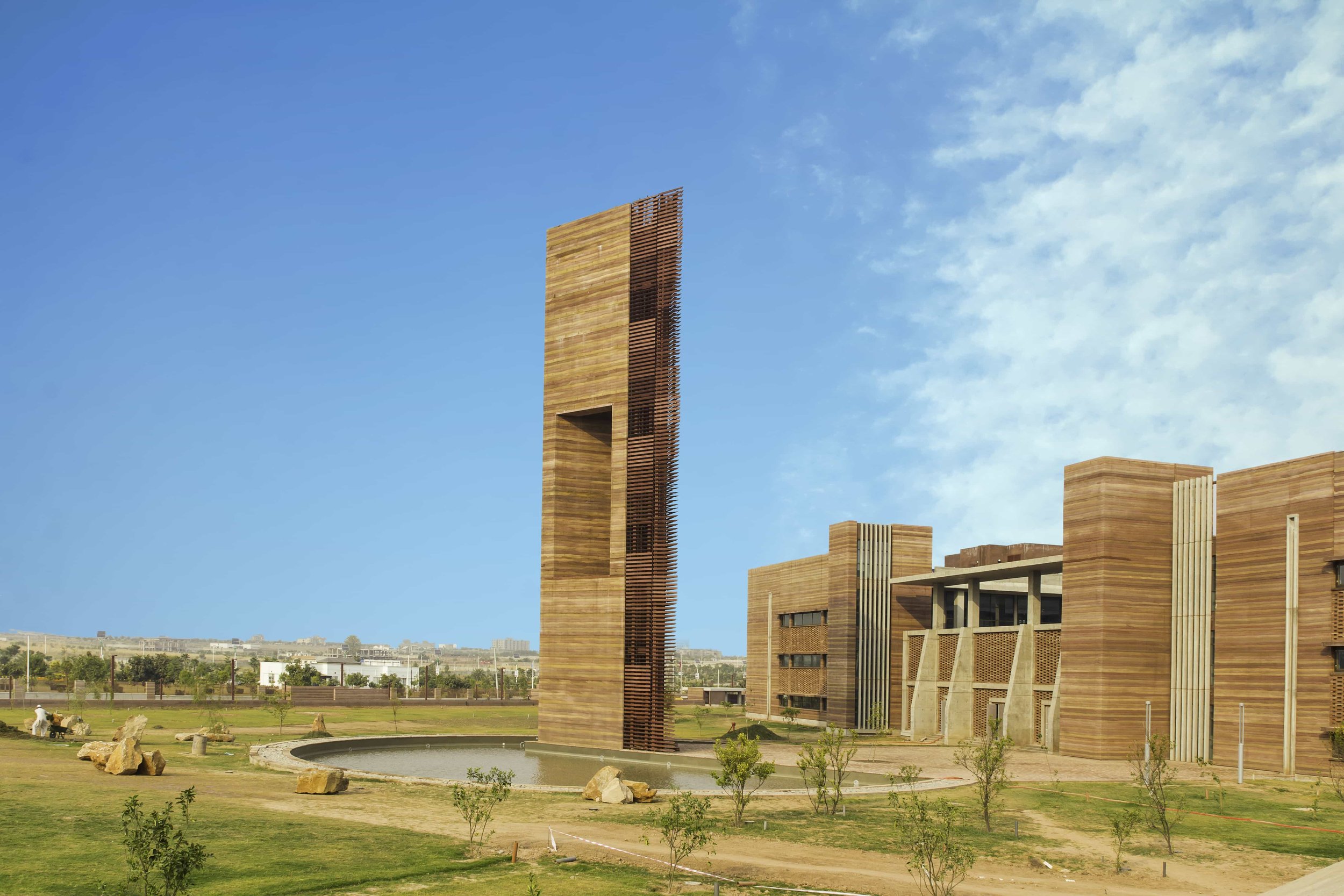
Telenor Headquarters - a SIREWALL project that includes the worlds tallest rammed earth structure at 100 ft tall (approximately 30 meters tall)
That experience is not useful only on record-setting buildings. It can also protect a modest home or a first-time rammed-earth project from avoidable mistakes.
That is one reason SIREWALL developed educational programs.
People do not take a course simply because they want facts about rammed earth. They usually want to build something real.
They may be planning their own home. They may be architects introducing rammed earth into their work. They may be contractors developing a new construction capability.
SIREWALL can help them understand materials and mix development, plan for suitable forms and equipment, connect with experienced architects and engineers, prepare for permitting, understand the construction process and appropriate means and methods before the work begins.
There is a cost to gaining 35 years of experience. One of the main benefits of working with an experienced system is that the client and project team do not have to pay to rediscover every lesson the hard way.
Avoiding one major design, testing, or construction failure can be worth far more than the original cost of the expertise that prevented it.
PART 6 — THE REAL COST OF RAMMED EARTH
One question connects all six of those differences: what does the wall actually cost?
Many comparisons begin and end with the initial price of the rammed-earth portion.
But that may not be the cost of the complete finished exterior wall. It is certainly not the full cost of owning that wall for decades.
A low-strength SRE wall may cost less to build initially.
But what must be added for structure, insulation, moisture protection, finished surfaces, and sealing? What maintenance will those materials require? What happens if testing, design, or construction mistakes have to be corrected later?
Those costs belong in the comparison too.
While SIREWALL may require a higher upfront investment in material development, testing, engineering, equipment, and training, it can also eliminate significant additional construction costs and reduce long-term maintenance and replacement requirements that would otherwise appear elsewhere in the project.
The right question is not, “Who can build the cheapest rammed-earth wall?”
It is, “What will the complete wall cost, what will it deliver, and what will it require over the life of the building?”
CONCLUSION — WHICH APPROACH IS RIGHT FOR YOU?
Is stabilized rammed earth (SRE) a bad building material?
No.
It can be beautiful, practical, and appropriate for some low strength requirement projects. Although it comes with inherent risks, it is however possible to create a well-engineered SRE wall that might be able to deliver excellent performance. There is just no clear, standardized, system to do that.
One of the main messages here is that SRE and SIREWALL should not be treated as equivalent simply because both are called rammed earth.
At SIREWALL, we have developed better rammed-earth construction means, methods, processes, procedures, results. The proof is in the pudding or in the case the rammed earth projects that have utilized SIREWALL.
https://sirewall.com/projects/
https://www.sirewall.us/commercial
https://www.sirewall.us/residential
We believe in starting with strength and will only ever build rammed earth that exceeds 3000 psi (20 MPa). We believe in designing and building a complete wall system rather than just building a beautiful wall. We have demonstrated that the up-close finish on the wall matters. We have proven that a tested, repeatable process is better than reinventing the method on every project. And we know that decades of experience will make the next project more predictable and successful.
If you are building a permanent home, designing an exceptional building, or looking for a rammed-earth wall system intended to perform for generations, SIREWALL is easily the logical choice.
Before choosing a wall, look beyond its color and layers. Look beyond the beauty of the wall.
Ask what strength has been demonstrated. Ask where the insulation is. Ask what additional structure and finishes must be added. Ask how the wall will manage weather and moisture. Ask how the process controls the result. And ask what the complete wall will cost over time.
That is how you compare rammed earth honestly and accurately.
In some of our other articles and videos, we will examine the practical realities of building with SIREWALL, including materials, costs, equipment, and the construction process.
If SIREWALL is the direction you want to take, our courses and support programs can help you prepare for the project and avoid learning every lesson the hard way.
Our goal is not simply to teach people about rammed earth. It is to help people build extraordinary buildings that last.
